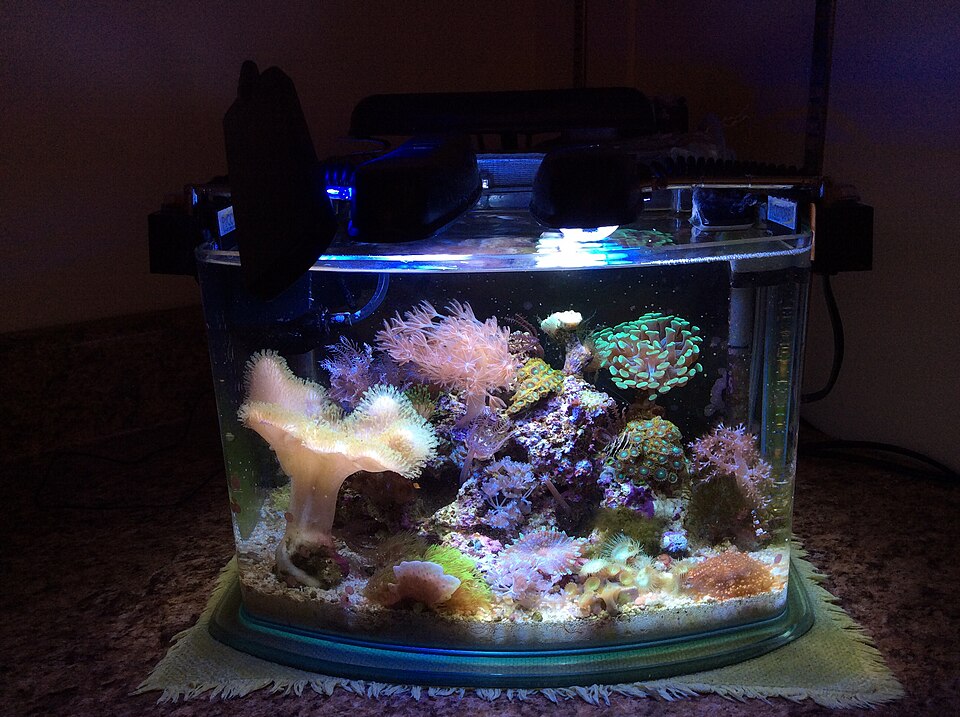
Same as freshwater, a reef runs on the nitrogen cycle. Bacteria turn fish and coral waste (ammonia) into nitrite, then into nitrate, which is way less toxic. In my tank, the macroalgae then soaks up that nitrate as it grows. In most freshwater setups, a big chunk of those bacteria live in the filter media.
But I'm doing a tank with NO FILTER. So the bacteria need somewhere else to live, and that's the rock. Reef rock is super porous, which means loads of surface area for bacteria to grow on.
Live rock or dry rock?
This was my first real decision, and I went back and forth on it a lot.
Live rock is rock that comes out of an established tank or the sea, already covered in bacteria, coralline algae and tiny critters. I actually found a local listing for pieces covered in that pretty pink coralline, and I was very tempted. It's a head start, and it looks alive from day one.
The catch is you get whatever comes with it. That can include pests (aiptasia and mantis shrimp are the classic horror stories, whatever that was), and if some of the life on it dies during transport, it rots and can mess up your water right at the start.
Dry rock is the opposite. It's clean, dead and cheap, and you can play with the layout as long as you want before adding water. The downside is it starts with nothing living on it, so you have to build up the bacteria yourself as part of cycling the tank.
I went with dry rock. I want to know exactly what's going into my tank, and I really want to be able to arrange things properly before it's full of water. I got 2 kg of VASTOCEAN dry rock for S$15.60, then another 1 kg for S$6.97 when the tank got bigger.
Three islands
With 90 cm to play with, the plan is three separate rock islands instead of one big pile.
The one by the wall is for macroalgae, mainly sea grapes. The middle one is the main reef, with mostly soft corals. The small one at the open end is just for the xenia, because xenia is known to spread like crazy, and I want to be able to lift that rock out if it gets out of hand.
Gaps of open sand between the islands also mean I can actually reach the glass to clean it, and the fish (one day!) have room to swim.
To hold everything together I got some aquascaping glue. But nothing gets glued until I've dry-fit everything in the actual tank.
Sand: buying this one in person
My first instinct was more sand = more bacteria = better. But a deep sand bed is its own whole thing to manage, so I'm keeping it to a shallow layer that's easy to clean.
We're almost all prepped for the build - I'm so excited!!
xo, yy
Some links in this article are affiliate links. I may earn a commission if you buy through them.