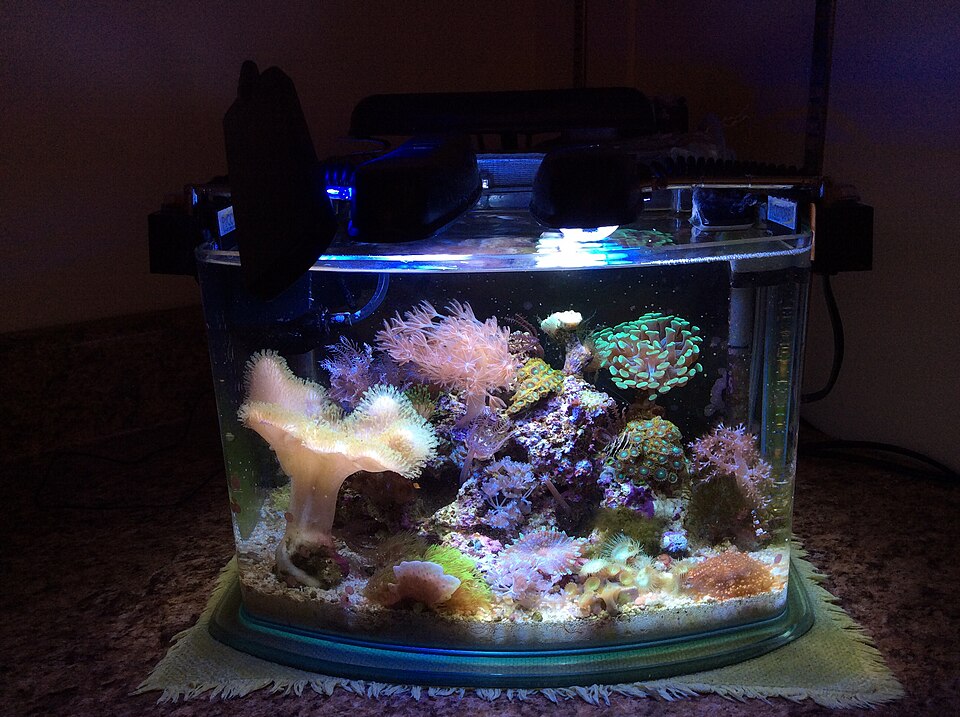
Something I low-key wished I knew before starting building a reef tank - we can't use tap water. I used to use tap water on my freshwater tanks (maybe that's why they didn't do well), so having to filter the water is a step I didn't think I needed to do, but here we are.
But it does make sense- living in a huge ocean, you'd be used to little to no changes to the water quality around you, whereas you don't get that stability in a room. It's like farting in a enclosed space- any small changes are amplified!
I started searching for a RO/DI (reverse osmosis and deionisation) filter on Taobao, but wary about shipping costs, I instead found an RO/DI filter on Shopee.
There's different stages available, and different capacities, at different prices. Naturally that meant that we'd have to then make value judgements - my favourite nightmare!
So this listing had several versions - S$95 / S$129, and I wanted to know whether it was worth paying more.
This is for a small office reef, so I’m trying to keep the equipment manageable. At the same time, I don’t want saving a bit of money now to make every water change annoying later.
How much water will I be standing around waiting for?
The listing called the two units 150 GPD and 400 GPD )gallons per day), but the more useful figures for me were the seller’s estimates in litres per hour: 8–16 for the smaller unit and 18–35 for the larger one.
That gave me something I could relate to the tank. A first fill of roughly 24 litres would take about 1.5-3 hours at the smaller unit’s quoted output. The real duration will depend on how much of my tank is water and not hardscape!
The first fill should HOPEFULLY only happen one time, while water changes and topics would be a much smaller batch - but still time I have to set aside, and deal with the waiting. My distracted mind will probably really dislike this part the most, since an open task is a BIG distraction to whatever I'm working on. At the quoted rate, 2.5 litres would take roughly ten to twenty minutes to produce, still decent.
So the unit I ordered is the Townbright compact four-stage 150 GPD RO/DI. I paid S$94.48 for it. This is probably a good balance between speed and cost. And also, I didn't want a huge filter, as I can't permanently leave it in the toilet so that's one more thing that I need to add to my water change workflow.
The routine creates/removes laziness
I don’t yet know what either unit would produce from the office tap. Water pressure and temperature affect membrane output; DuPont’s membrane manual explains those dependencies. We'll get real world testing once it arrives, fingers crossed it is fast enough.
There are other parts of using it that I still need to work through. I need to get a jerry can for clean water, and flush the waste water (so wasted) and a way to connect the unit to the taps in the office toilet!
How will I know the water is ready to use?
I asked about this while choosing the unit: how do I test the RO/DI water and make sure it reads zero TDS?
A TDS meter will be useful for checking the output and watching for changes as the filters are used. It estimates dissolved ionic material from conductivity, as Hanna explains in its water-testing guide. A zero on the display has limits; it doesn’t identify every possible contaminant. Lucky for me, I have a very unused one from my freshwater days.
Waiting for the delivery to arrive!!
xo, yy
Some links in this article are affiliate links. I may earn a commission if you buy through them.